


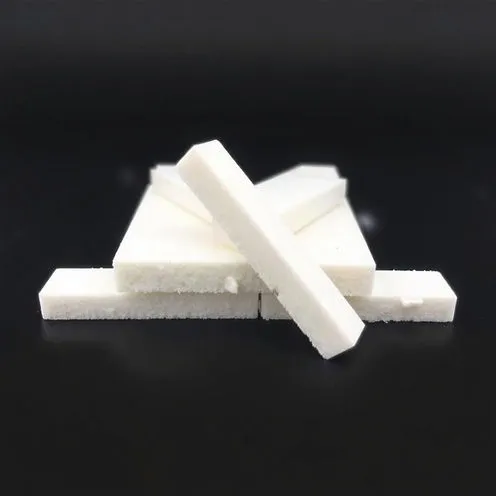
Selection of an appropriate ceramic material in engineering and manufacturing projects is one of the vital steps. Alumina Sheet and Alumina Bar are both produced from high-quality aluminum oxide ceramics, but have different applications. The knowledge of their properties and their typical uses enables engineers, researchers and procurement teams to make a choice of the material that fits their technical needs and requirements, rather than a one-size-fits-all solution.
Understanding the Differences Between the Two Forms
The material properties are similar for both products, but the shape(s) of the products affect their uses. Alumina Sheet is a flat ceramic part, which is often used in the selection of insulation panels, protective surfaces and structural parts with a wide working area. It has a flat shape that can be used for cutting, machining, or assembly into a bigger structure.
Alumina bar is manufactured in a solid rectangular or square shape, on the other hand. It is frequently selected for mechanical supports, wear-resistant parts, fixtures, and custom-machined parts to provide thicker and stronger parts.
Comparing Their Performance Characteristics
They both share the same benefits in challenging environments as they are made of the same alumina ceramic. These include being very hard, highly wear-resistant, having high electrical insulation and high-temperature operational reliability.
The main difference is the application of the material. An Alumina Sheet is typically used for surface coverage; an Alumina Bar offers extra strength for surface areas subjected to mechanical loading or when fabricating into a special shape.
During the design phase, both alternatives are typically considered to be able to determine which one will work best for the desired function, while also avoiding adding any additional complexity to the design.
Applications Across Different Industries
The decision between Alumina Sheet and Alumina Bar will depend on the industry and equipment type to be developed. Advanced ceramic materials are very popular due to their ability to retain mechanical properties and/or resist corrosion in environments to which metals are susceptible.
Common industries include:
-
Aerospace engineering
-
Semiconductor manufacturing
-
Scientific laboratories
-
Medical equipment production
-
Industrial furnace systems
-
Electronics manufacturing
In these areas, the geometry of the required component is often the deciding factor between using a flat sheet or solid bar.
Factors to Consider Before Selecting a Material
Each project will have specific performance requirements. There are a number of technical considerations to make before deciding on choosing between these ceramic products.
One of the initial factors is likely to be temperature resistance. Materials used for projects with continuous heat exposure should be able to withstand the heat for a long duration.
Careful evaluation of mechanical loading should also be considered. If your parts take heavy loads or constant hits, an alumina bar can give you much better strength and safety. In the case where insulation or a protective surface is the desired objective, it may be better to use an Alumina Sheet.
It is also important for engineers to consider dimensional tolerances, machining criteria, installation techniques and compatibility with adjacent materials before finalizing their selection.
Custom Manufacturing Can Improve Project Results
There are a number of industrial applications that call for dimensions or features that the standard products are not able to provide. By custom machining, ceramic parts are able to be produced that satisfy exact specifications of design without compromising the material’s properties.
Shaping alumina sheets or bars into custom sizes is simple. You can drill holes, cut small slots, or buff down the faces. That flexibility really counts in tight tasks, like lab testing, robotic builds, or modern plant floors where every small fit matters.
Working with a skilled ceramic supplier helps you pick the right build method for your exact task.
Making the Right Choice for Long-Term Performance
Picking the right ceramic takes more than finding the toughest material on the shelf. You have to fit the part to the job. Reviewing the operating conditions, the geometry of the components and their expected service life will increase reliability and reduce future maintenance concerns.
Every product has its own set of pros and cons; therefore, engineers need to be familiar with the advantages and disadvantages of each product so that informed decisions can be made during the design process, depending on the requirement.
Conclusion
Alumina sheets and bars both hold up well in harsh shop settings. Yet, each choice fits a distinct job depending on your build and daily shop stress. Sites like regmetals.com make it easy to compare tough ceramics and select the best parts for engineering, lab work, or plant builds. Pausing to weigh these shapes first can boost tool life, cut shop stress, and protect your setup over time. As you map out a new project, a fast chat with material pros is a smart way to match ceramic parts with your actual targets.