


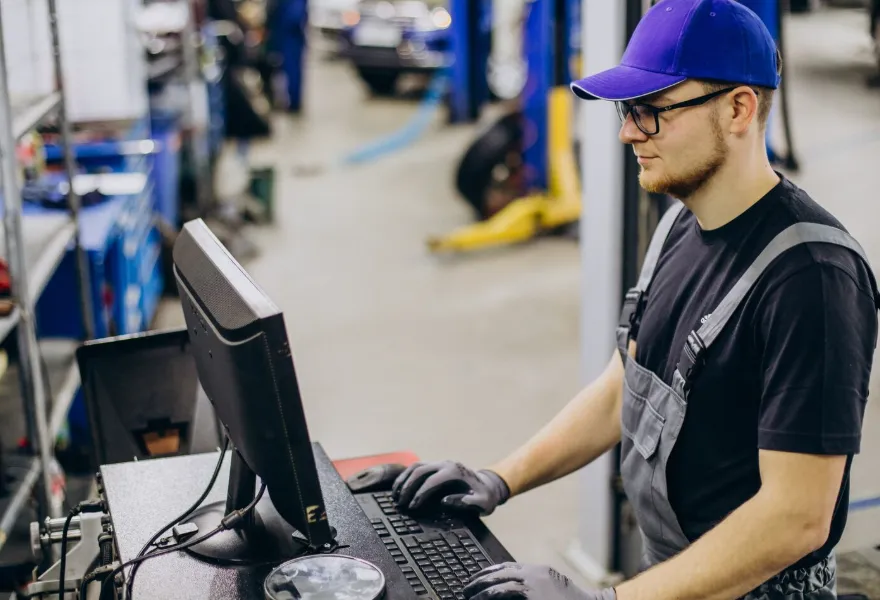
Choosing software for a garage is not as simple as picking the product with the most features. A workshop has its own way of working, and software needs to fit into that routine without slowing the team down.
A vehicle arrives, customer details have to be recorded, the job needs to be created, services have to be added, staff need to know what they are handling, spare parts may be used, and finally the invoice has to be prepared. At the same time, the workshop owner still needs to keep an eye on expenses, customers, stock, and business records.
This is why Garage Management Software has become an important consideration for workshops in 2026. The purpose is not simply to move paper records onto a computer. Good software should make everyday workshop work easier to organize and reduce the amount of repeated manual work.
But what should you actually look for when comparing options? The answer depends less on how impressive the software sounds and more on whether it handles the tasks your workshop deals with every day.
First, Look at the Complete Workshop Journey
Before comparing individual features, think about what happens when a customer brings a vehicle to your garage.
The customer needs to be identified. The vehicle needs to be recorded. A job card needs to be created. Services have to be added, and someone needs to be assigned to the job. Once the work is completed, the services and spare parts need to be reflected in the invoice.
After that, the workshop still has expenses to record, inventory information to maintain, customer records to keep, and business information to review.
If all these activities are maintained in different places, the workshop spends a considerable amount of time moving information from one record to another.
A useful Garage Management Software should bring the important parts of this process together.
1. Customer and Vehicle Management
A workshop deals with customers first, so customer information is one of the most important records to maintain.
When a returning customer arrives, staff should be able to find their information without searching through old registers. Vehicle details should also remain connected with the customer so the workshop can identify the correct vehicle when creating a new job.
For example, Socioplace Auto allows staff to start a job using the customer’s mobile number or vehicle number. Existing customer details can be used when available, reducing repeated data entry.
This is particularly useful during busy hours because staff can move from customer identification to job creation without spending unnecessary time entering the same information again.
2. Job Cards for Organized Repairs
The job card is where the actual workshop work is recorded.
A good digital job card should contain the relevant customer and vehicle details, required services, assigned staff, and job status. This gives the workshop one place to follow the repair.
When several vehicles are being handled at once, this becomes important. Without a clear job record, staff may have to ask about the status of a vehicle or check different paper notes.
Garage Management Software with job card management gives the team a clearer way to record and follow every repair.
The real benefit is not simply having a digital version of a paper job card. It is having that job information available for the next steps in the workshop process.
3. Simple Service Management
Every vehicle that enters a garage may need different work.
One job might involve a single service, while another could require several services. Staff should be able to add the required services without making the job creation process complicated.
Service information also becomes important when the invoice is prepared.
When the services already recorded in the job can be used during billing, staff don’t have to manually recreate the same information later.
This reduces repeated entry and makes the transition from repair work to billing more straightforward.
4. Inventory Management That Fits the Repair Process
Spare parts are an important part of an auto repair workshop.
A garage may have many different parts in stock, with different quantities, buying prices, selling prices, and tax details. Keeping this information accurate becomes harder as the workshop handles more vehicles.
Inventory management within Garage Management Software helps keep these records organized.
Socioplace Auto provides inventory management for workshop spare parts and connects inventory information with billing. This helps workshops maintain better consistency between the parts used during repairs and the parts included in customer invoices.
For a busy workshop, that connection can be more useful than maintaining a separate stock register.
5. Billing Should Be Accurate and Straightforward
Billing is the point where the work completed in the workshop becomes a customer invoice.
The invoice may contain services, spare parts, service packages, discounts, rewards, and GST. Manually calculating all these amounts increases the possibility of errors.
When comparing Garage Management Software in 2026, look for a billing process that uses the information already recorded during the repair.
Socioplace Auto supports GST invoice generation with automatic calculations. Services, spare parts, packages, discounts, rewards, and taxes can be included while preparing the invoice.
The software also supports A4 and thermal invoice printing, allowing workshops to use the format that matches their existing billing setup.
6. Staff Assignment Should Be Part of the Job
A workshop may have several employees working on different vehicles.
If staff assignments are handled informally, it can become difficult to know who is responsible for a particular job, especially when the workshop is busy.
Staff assignment within the job card gives the team a clearer record of who is handling the repair.
The job status can then be followed as the work moves forward.
This makes coordination easier without adding another separate process for workshop staff.
7. Expense Management Deserves Attention
When owners compare software, they often focus heavily on customer management and billing and overlook expenses.
But expenses directly affect the financial side of a workshop.
Daily expenses can be recorded with details such as description, amount, payment mode, date, and notes. Being able to search and filter these records makes it easier to review previous spending.
Socioplace Auto also allows workshop users to view today’s expenses, monthly expenses, and top expenses.
This gives owners a clearer picture of workshop spending rather than relying on memory or scattered records.
8. Loyalty Management for Existing Customers
A workshop doesn’t only need new customers. Existing customers are also important.
A loyalty points system can give customers an additional reason to return for their next service. But managing points manually can become another administrative task.
A Garage Management Software with loyalty management can keep this process connected with customer billing.
Socioplace Auto allows workshops to configure loyalty points and apply available points during billing.
The idea is simple: customer loyalty can be managed as part of the existing workshop process rather than maintained through a separate notebook or spreadsheet.
9. Service Packages for Regular Combinations
Some workshops regularly provide a combination of services together.
Adding each service individually every time can take additional effort. Service packages allow related services to be grouped together so they can be selected as a unit when applicable.
This can make service selection and billing more convenient, particularly for workshops that repeatedly provide the same combination of services.
The feature is useful because it simplifies an existing task rather than creating another process for staff to learn.
10. Reports for a Better View of the Workshop
Once a workshop starts recording more information digitally, it needs a way to review that information.
Reports can help owners understand the records generated through everyday workshop activities.
Instead of manually collecting information from job cards, billing records, inventory records, and expenses, reports provide a more organized way to review business activity.
This becomes increasingly useful as the workshop grows because manually combining information from multiple sources takes more time.
Don’t Judge Software by Its Feature Count
There is a common mistake when comparing Garage Management Software: assuming that the software with the most features is automatically the best.
That isn’t necessarily true.
A workshop doesn’t need dozens of features that nobody uses. It needs the features that solve its actual daily problems.
Ask practical questions instead.
Can staff find a customer quickly? Can they start a job using customer or vehicle information? Can they add services and assign staff without unnecessary steps? Can they track the job status? Can spare parts be managed alongside billing? Can GST invoices be generated accurately? Can expenses and loyalty points be managed without separate records?
If the answer is yes, the software is already solving the problems that matter.
Check Whether the Features Work Together
Individual features are useful, but their connection is even more important.
Customer information should support job creation.
Job information should support billing.
Inventory should support accurate invoices.
Billing should support loyalty points.
Expenses should remain organized.
Reports should bring useful business information together.
This connected approach is one of the main reasons workshops consider moving from notebooks and spreadsheets to Garage Management Software.
One Option Workshops Can Consider
Socioplace Auto brings several core workshop activities into one platform, including customer management, job cards, billing, inventory, staff management, service packages, loyalty management, expense management, and reports.
For workshops looking to replace scattered records with a connected system, this approach can simplify everyday management.
Still, software should be judged based on the workshop’s actual requirements. A system is only useful if the team can understand it, use it consistently, and complete daily tasks without unnecessary complexity.
Final Thoughts
The best Garage Management Software in 2026 is not necessarily the one with the biggest feature list or the most complicated interface.
It is the one that fits the way your workshop operates.
Customer and vehicle records should be easy to access. Job cards should keep repairs organized. Services and staff assignments should be clear. Inventory should stay connected with the work being billed. Invoices should be accurate, expenses should be recorded, loyalty should be manageable, and reports should help owners understand their business.
When these everyday activities are connected, workshop management becomes less dependent on paper records, repeated data entry, and manual searching.
For an auto repair shop, that is ultimately what good Garage Management Software should do: make the work you already perform every day easier to organize and manage.