


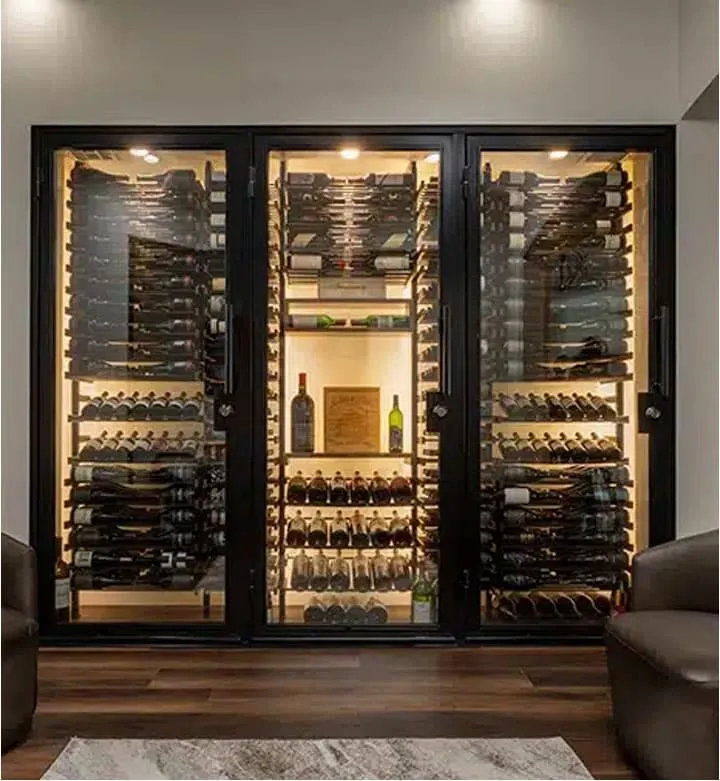
Glass can completely change the way a wine cellar feels within a home. The bottles don’t have to be tucked away behind solid walls; a glass entrance can make the bottles part of the surrounding interior. It’s an appealing visual link, particularly in modern residences. But there’s more to glass wine cellar doors than meets the eye. The door must fit into the room design, and must be able to provide the controlled environment demanded for wine storage.
Start With What You Want the Door to Achieve
When selecting a door style, consider what it’s intended to do. Does the purpose of the use of the room involve displaying the collection, linking the cellar with an entertaining space, or just opening up the space?
A visible cellar can be a part of the architecture, instead of a storage space. Viewing of the collection is viewable from outside the room, and homeowners can easily inspect their bottles from outside the home.
If privacy or visual separation is more important, a solid door may make more sense. Neither approach is automatically better. The right choice depends on how the cellar relates to the rest of the home.
Consider the Environment Behind the Glass
A wine cellar is not simply another room with attractive storage. Its interior environment needs to remain controlled, which makes the door an important part of the overall enclosure.
Glass selection, framing, sealing, and installation should therefore be considered alongside the room’s insulation and climate-control plan. A visually impressive entrance is less useful if it has not been properly integrated with the conditions the cellar is designed to maintain.
This is one reason door decisions are better made during planning rather than after the rest of the room has already been completed.
Think About Visibility from Different Angles
One advantage of glass is that it can make a collection visible from nearby rooms. But the amount of visibility depends heavily on the placement and size of the glass area.
A full-height entrance creates a very different effect from a smaller glazed section. The surrounding walls, lighting, rack arrangement, and hallway can also change how the collection appears from outside.
Think about what someone will see when approaching the cellar. A well-planned view can highlight selected bottles or architectural features without making every part of the storage area compete for attention.
Lighting Becomes More Important
Glass and lighting naturally work together. Once the collection can be seen from outside, lighting inside the cellar becomes part of the home’s visual design.
The goal should not be to make every bottle as bright as possible. Lighting needs to support visibility while fitting the overall atmosphere of the room. Different areas can have different purposes, with display sections receiving more visual attention than practical storage areas.
Additionally, it is important to take into account the appearance of the cellar in the light of a bright surrounding room, as well as in the light of a dark room in the evening. The room’s appearance can vary throughout the day with the change in the glass entrance.
Think About Everyday Access
A beautiful door still needs to work well in daily use. Consider how often the cellar will be entered, who will use it and whether the entrance provides enough clearance for comfortable movement.
This matters particularly in entertaining spaces. A door that opens into a busy walkway can become inconvenient, even if it looks excellent in photographs.
The handle, swing direction, surrounding furniture and nearby traffic should all be considered before the final configuration is chosen. Small details can have a surprisingly large effect on everyday usability.
Glass Is Not Just a Style Choice
It is tempting to think of glass as purely decorative, but it can influence several other design decisions. Once the collection is visible, racking becomes more noticeable. Lighting becomes more important. The interior finish can also have a greater effect on the appearance of the surrounding room.
That can be an advantage because the cellar becomes a feature of the home. It also means the interior needs to be planned as carefully as the entrance.
A visible cellar benefits from a coordinated design where the door, racks, lighting, flooring, and surrounding architecture feel like parts of the same space.
Know When a Different Approach May Work Better
Not every project needs the same style of wine cellar doors. A basement wine room does not need a flashy door. But a cellar near a main party room looks great with an open setup. If you want total privacy, a solid door fits the spot best.
The decision should also consider privacy, room placement, and everyday access. A cellar beside a busy hallway may need an entrance that feels more discreet, while a showcase cellar can use the doorway as part of the overall interior design. The important question is whether the chosen door supports the way the room will actually be used.
Rather than choosing a style simply because it looks modern, consider how the entrance works with the surrounding architecture, lighting, racking, and climate-controlled environment. This path helps the door fit the room well, so it works hard instead of just sitting there to look pretty.
Make the Door Decision with the Whole Room in Mind
The entrance should be considered together with the collection, racking, lighting, climate control, and surrounding architecture. Choosing the door independently can lead to compromises that only become obvious after installation.
A better approach is to imagine the finished room from both sides of the entrance. What will the homeowner see when standing outside? How will bottles be accessed from inside? Does the door complement the room rather than dominate it? Will the entrance remain practical as the collection grows?
These questions help turn a design preference into a practical decision.
Conclusion
While the open, connected and impressive effect of glass is beneficial for a wine cellar, it is what it does for the rest of the room that can make all the difference in its worth. The first thing to be taken on board is the way the building performs and its visual association, lighting, accessibility and character of its context, rather than appearance. If these are considered together, a glass entrance can easily blend with the house’s design. If you are considering other possibilities for your own cellar, you may want to take a look at customwinecellar.com to consider some professionally planned wine cellar solutions to consider before choosing.