


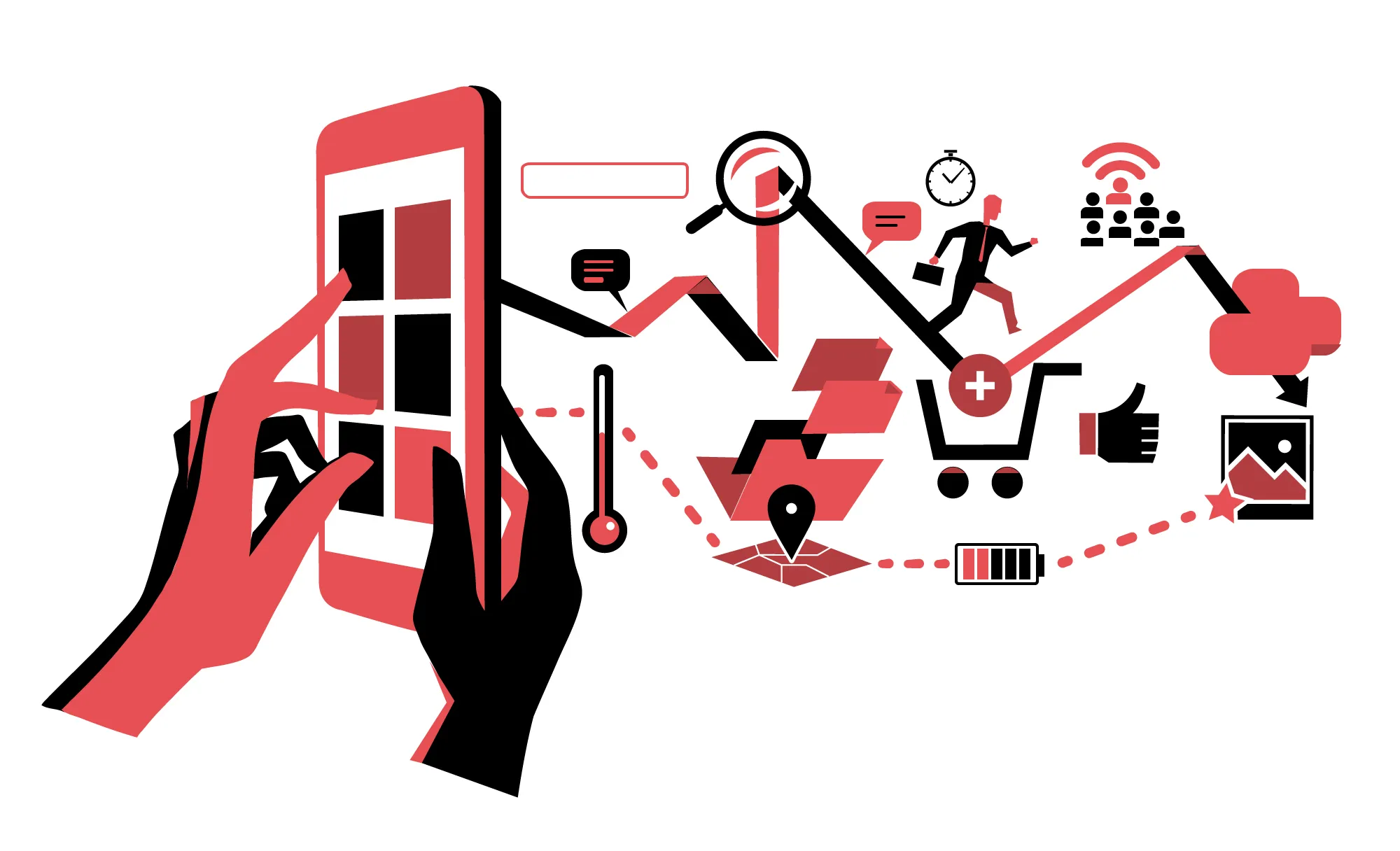
Houston’s business landscape is changing quickly. From healthcare and energy to logistics, retail, real estate, and professional services, companies are using digital technology to make everyday processes easier and give customers better ways to interact with their businesses.
Mobile apps are a big part of that shift.
In 2026, businesses are moving beyond basic apps that simply display information. They are looking for applications that can personalize experiences, automate repetitive work, process data intelligently, and connect customers with services in real time.
For companies planning a new app or upgrading an existing one, understanding the latest development trends can help them make better technology decisions.
Here are some of the mobile app development trends expected to have a strong impact on Houston businesses in 2026.
1. AI Is Becoming Part of Everyday Mobile Apps
Artificial intelligence is one of the biggest changes happening in mobile app development.
Businesses are using AI for practical purposes rather than adding it simply because it is popular. Depending on the application, AI can help with customer support, recommendations, search, automation, forecasting, and content personalization.
For example, an eCommerce app can recommend products based on customer activity. A healthcare application can help users find relevant information or manage appointments. A logistics app can analyze delivery information and help businesses identify potential delays.
The important thing is to start with the business problem and then decide whether AI is the right solution.
2. More Personalized User Experiences
Customers do not want to spend unnecessary time searching for what they need.
Modern mobile applications can use customer preferences and previous interactions to create more relevant experiences. A shopping app may display products based on browsing behavior, while a fitness app can suggest workouts based on a user’s goals and activity.
Personalization can make an app feel more useful without making the interface complicated.
However, businesses should be transparent about data usage and avoid personalization that feels intrusive.
3. Mobile Apps Are Becoming More Useful for Business Operations
Mobile applications are not only customer-facing tools anymore.
Many Houston businesses are using internal applications to help employees manage work while they are away from their desks.
For example, field-service teams can use mobile apps to receive jobs, update work status, communicate with customers, and submit reports. Sales teams can access customer information while visiting clients. Managers can monitor important business activities from their phones.
This trend is particularly useful for businesses where employees spend significant time outside the office.
4. Cloud-Based Mobile Applications
Cloud technology continues to play an important role in modern app development.
Cloud-based infrastructure can make it easier for businesses to manage data, connect different systems, scale applications, and support users across locations.
For a growing business, scalability matters. An app that works well for 1,000 users should have a plan for handling significantly more users as the business grows.
Cloud services can also make collaboration between mobile apps, websites, databases, and third-party systems more practical.
5. Stronger Mobile App Security
As mobile applications handle more customer and business information, security is becoming a core part of development.
Businesses need to think about security from the beginning rather than treating it as something to address after an app is completed.
Important areas include:
- Secure authentication
- Data encryption
- API security
- Access controls
- Secure payment processing
- Regular security testing
- Safe data storage
- Appropriate privacy practices
For businesses handling sensitive information, security should be considered during planning, development, testing, and maintenance.
6. Cross-Platform App Development Continues to Grow
Businesses often want applications for both iOS and Android without unnecessarily developing two completely separate products.
Cross-platform technologies can help development teams build applications that work across multiple platforms while maintaining a consistent user experience.
This approach can be useful for startups and growing businesses that need to manage development budgets carefully.
That does not mean cross-platform development is the right choice for every project. The best approach depends on the application’s features, performance requirements, target users, and long-term plans.
7. Better Integration With Wearable Devices
Wearable technology is creating additional opportunities for mobile applications.
Smartwatches and other connected devices can work alongside mobile apps to provide users with information in convenient ways.
Healthcare and fitness businesses are particularly well positioned to benefit from this trend. Fitness apps, for example, can use activity information from compatible devices to provide users with a more complete picture of their daily activity.
Other industries may also find opportunities as wearable technology continues to evolve.
8. Mobile Payment Features Are Becoming More Important
People increasingly expect simple and convenient payment experiences.
Businesses can integrate mobile payment options into their applications so customers can complete transactions without leaving the app.
Depending on the business model, applications may support features such as:
- Digital wallets
- In-app purchases
- Subscription payments
- Saved payment methods
- One-click checkout
- Payment notifications
A smooth checkout experience can remove unnecessary friction and make it easier for customers to complete a purchase.
9. Voice and Conversational Interfaces
Typing is not always the easiest way to interact with an application.
Voice technology and conversational interfaces can make certain mobile experiences more convenient. Users may be able to search for information, ask questions, or complete simple tasks through natural language.
Combined with AI, conversational features can make applications feel more interactive.
Still, businesses should only use these features when they genuinely improve the user experience. A voice assistant that does not solve a real problem can quickly become an unnecessary feature.
10. Location-Based Mobile Experiences
Houston is a large and highly active business market, which makes location-based functionality useful for many types of applications.
Restaurants, delivery services, transportation companies, real estate businesses, retailers, and service providers can use location technology in different ways.
Examples include:
- Finding nearby services
- Tracking deliveries
- Showing nearby stores
- Providing location-based offers
- Tracking service professionals
- Improving route planning
Location features can be valuable, but businesses should clearly explain why location access is needed and follow appropriate privacy practices.
11. Super Apps and Connected Digital Services
Another trend worth watching is the development of applications that bring multiple related services together.
Instead of asking customers to use several different applications, businesses can combine connected services into one platform.
For example, a business platform might include account management, payments, customer support, booking, notifications, and service tracking in one place.
However, adding too many features can also make an application confusing. The goal should be convenience, not complexity.
12. Better Accessibility and Inclusive App Design
Mobile apps should be usable by as many people as possible.
Accessibility is becoming a more important part of app design, including readable text, clear navigation, suitable contrast, screen-reader support, and intuitive interactions.
Designing with accessibility in mind can improve the experience for users with disabilities while often making the application easier for everyone to use.
How Houston Businesses Can Choose the Right App Development Approach
Following every technology trend is not a good development strategy.
A business should first understand its customers, goals, budget, and operational challenges. From there, it can determine which technologies actually make sense.
For example:
- A retail business may benefit from personalization and mobile payments.
- A logistics company may prioritize GPS tracking and real-time notifications.
- A healthcare business may focus on secure communication and appointment management.
- A service company may need scheduling and field-service functionality.
- A startup may prioritize a simple MVP that can be improved based on customer feedback.
Working with an experienced mobile app development company Houston businesses can rely on can help turn these requirements into a practical development roadmap.
Why Local Market Understanding Matters
Technology is only one part of successful app development.
Understanding the target market also matters.
Houston businesses serve customers with different needs, expectations, and habits. A mobile application should be designed around those users instead of simply copying a popular app from another market.
A good development process usually involves research, user-flow planning, UI/UX design, development, testing, launch, and continuous improvement.
This helps businesses build an app that is useful rather than simply checking a technology box.
What About Businesses Outside Houston?
The same trends are influencing businesses across Texas.
Companies looking at mobile app development Texas can benefit from technologies such as AI, cloud computing, mobile payments, cross-platform development, and personalized user experiences.s
At the same time, every Texas market has its own characteristics. A business operating in Houston may have different requirements from one serving customers in Dallas, Austin, or another city.
For businesses operating in the Austin market, exploring app development Austin solutions can help identify an approach that fits their particular customers, industry, and business goals.
How to Prepare Your Business for Mobile App Development in 2026
Before starting development, ask a few straightforward questions:
What problem will the app solve?
A successful app should solve a real problem for customers or employees.
Who will use it?
Understanding your target users helps determine the features, design, and overall experience.
Which features are essential?
Start with the features that provide the most value. Additional functionality can be introduced later.
Does the app need AI?
AI can be valuable, but it should have a clear purpose. Do not add it just because it is trending.
How will success be measured?
Decide what matters before launch. It could be downloads, active users, completed purchases, customer retention, bookings, or reduced operational costs.
How will the app improve over time?
A mobile application should not be considered finished on launch day. User feedback, analytics, testing, and regular updates can help improve the product over time.
Final Thoughts
Mobile app development in Houston is moving toward smarter, more connected, and more personalized experiences in 2026.
AI, cloud technology, cross-platform development, mobile payments, wearable integration, stronger security, and location-based features are creating new opportunities for businesses across different industries.
But the most important trend is not a particular technology. It is the shift toward building apps around real user needs.
Businesses that focus on solving genuine customer problems, keeping the experience simple, protecting user data, and continuously improving their applications are more likely to get lasting value from their investment.
If your business is considering a mobile application in 2026, start with the problem you want to solve and build the technology around that goal.