


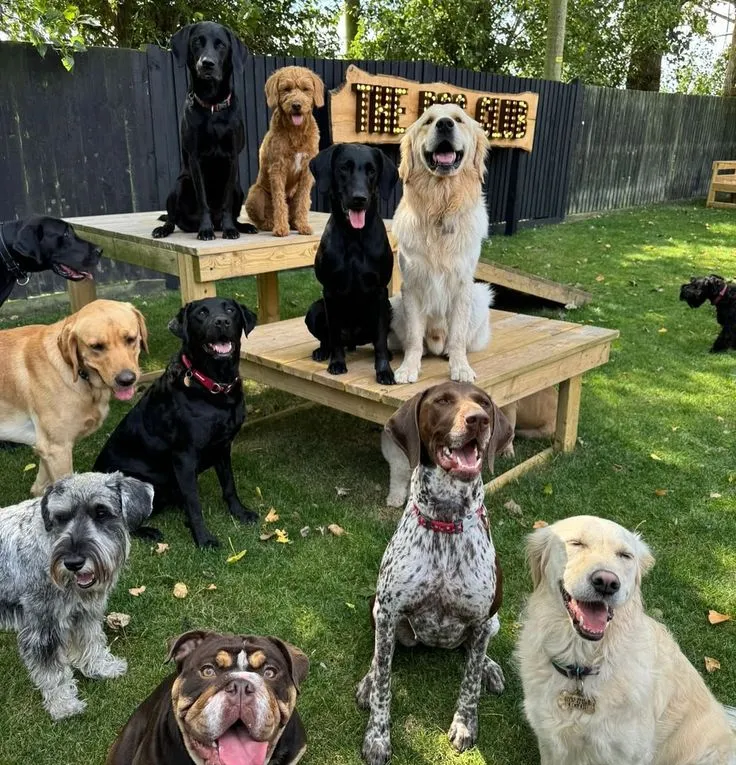
Puppies’ initial experiences will impact their level of comfort with humans, dogs, noise, location and routine changes. Socializing is more than just allowing a puppy to play with other dogs. It’s basically about teaching young dogs to feel comfortable, focused and flexible in various circumstances. Owners can develop new experiences over time and have puppies develop new behaviors that will help them in their lives long after they are a puppy.
What Good Socialization Really Teaches
Not all puppies are required to meet all people. Often, it’s better to learn to observe another person and/or dog calmly rather than approach them.
A well-socialized puppy slowly becomes accustomed to various surfaces, noises, interactions with others, handling, and canine interaction. These experiences can assist the puppy to learn that he/she does not need to be excited or fearful when encountering new situations.
You can’t possibly get everything in; the quality of each is more important. Puppies must have the time to digest what they are taught before they start to achieve another goal.
Why Controlled Experiences Matter
Too many new things going on at once can overwhelm young puppies. It becomes difficult to cope with a hectic situation, strangers, dogs that bark and noises.
This is where structured socialization classes for dogs can provide useful learning opportunities. A controlled setting allows owners to observe their puppy’s reactions while receiving guidance about when to encourage interaction and when to create more space.
If a puppy gets excited when a dog approaches, for instance, he or she may need to watch that dog from a distance for a while before he or she approaches. This helps the child to smooth out the transition to becoming calm rather than hurriedly greeting.
What Puppies Can Learn in Class
More than supervised play should be found in a useful class. Puppy training can be done to encourage puppies to be attentive to distractions, listen to one or two simple cues, settle down and behave well around people and other dogs.
The skill can be applied to real-life situations. A puppy might have to be calm when visitors come to the house, when they have to walk past another dog, tolerate routine handling, or visit an unfamiliar area.
Puppy classes for socialization can also be useful to teach owners to recognize signs to watch out for if a puppy is getting overstimulated. If the puppy becomes frantic, hides, repeatedly avoids interaction, or has a hard time focusing, he might need a more quiet environment and/or distance.
By understanding the indicators, they can make more informed decisions about training.
Let Confidence Develop Gradually
Pup’s temperament varies from puppy to puppy. You can explore an item right away, or one may need to observe the item before approaching it. Abnormally high and abnormally low results are not necessarily indicators of a problem.
Owners should not compare puppies or have a puppy who is unsure of himself or herself rush into a situation. Rather, they can make it easier and allow the puppy to get used to the challenge.
One such instance is adding a new household noise to a puppy’s environment. The owner is not going to make a loud and abrupt introduction, but will instead start with a lower level of intensity and reward quiet behavior. Getting the puppy used to the situation slowly will allow the puppy to allow the experience to happen without too much pressure.
Socialization Continues After Puppyhood
Don’t assume that the fact that a puppy has completed a puppy class means that socialization is finished. Dogs face new environments and experiences, people and animals, and situations, all through their lives.
Owners can reinforce positive skill development in daily activities like walks, visits, car rides and appropriate outings. The aim is not to make the dog interact all the time but to enable the dog to be comfortable and respond to these changes.
Owners will also be able to catch new challenges in time because they practice regularly.
Make Socialization Part of Training
The most effective socialization activities relate new experiences to hands-on training. Pupfish can be taught that it is helpful to keep calm, check on their handler, and act in response to familiar cues when there is an exciting stimulus nearby.
This is only tangentially related to mere exposure. It becomes a method of learning how to communicate, be confident, and control themselves, which can help in their future obedience training.
Conclusion
Socialization for puppies is about designing experiences, not demanding continual socialization. Handle puppies carefully, do not scold them, expose them to age-appropriate challenges, and provide consistent training from their owner that helps them learn to be useful dogs. Socialization should also be carried out throughout the dog’s life, as this will always involve new environments and different situations. If you want to use a more structured approach to training your puppy, there are options available, like puppy training videos and a professional training service at CanineMoxy.com that you may want to consider.