


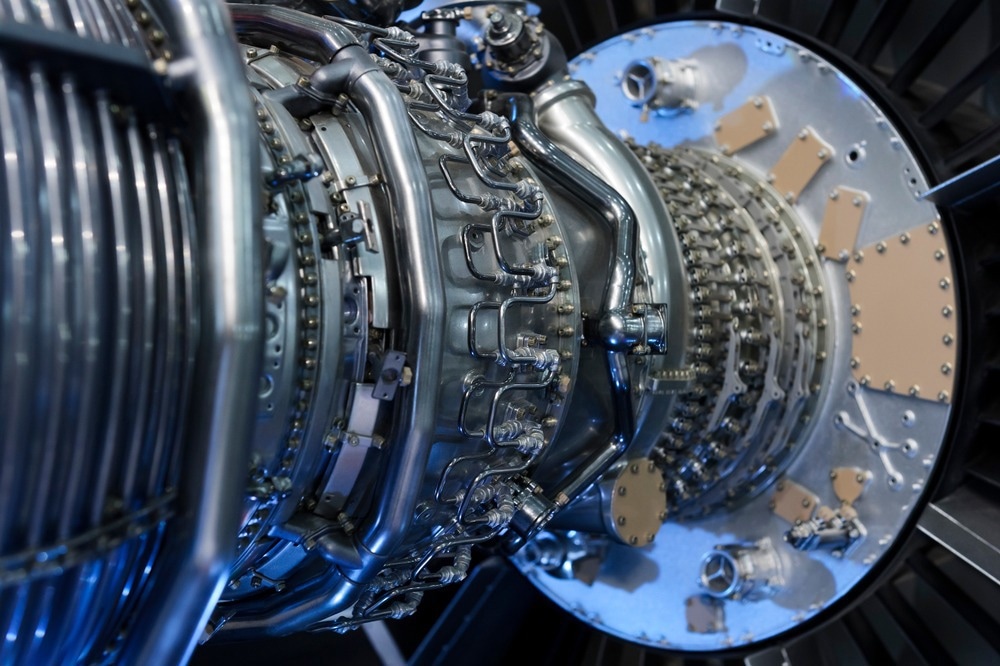
The continuous drive toward light-weighting in the automotive and aerospace sectors has accelerated the adoption of ultra-high-strength wrought aluminium sheet alloys. While medium-strength 5xxx and 6xxx series alloys form the backbone of conventional automotive stampings, high-performance structural applications—such as aircraft skin panels, floor beams, automotive crash rails, B-pillars, and battery enclosure frames—demand yield strengths exceeding 400 to 600 megapascals. Achieving these mechanical properties requires advanced precipitation hardening mechanisms within heat-treatable 2xxx ($text{Al-Cu}$) and 7xxx ($text{Al-Zn-Mg-Cu}$) alloy families, coupled with multi-stage thermal processing routines.
-
Strengthening Spectrum of Wrought Aluminium Alloys
-
-
Low / Medium Strength Ultra-High Strength
-
(Work Hardened / Medium Ageing) (Complex Precipitation Hardened)
-
-
+——————-+ +——————-+ +——————-+
-
| 3xxx / 5xxx Series| –> | 6xxx Series | –> | 2xxx / 7xxx Series|
-
| Yield: 100-250 MPa| | Yield: 200-350 MPa| | Yield: 400-600+MPa|
-
+——————-+ +——————-+ +——————-+
Metallurgy and Precipitation Sequences of 2xxx and 7xxx Alloys
Precipitation hardening (age hardening) relies on decreasing solid solubility of alloying elements with falling temperature. When these alloys are solution heat-treated at elevated temperatures and quenched rapidly to form a supersaturated solid solution (SSSS), subsequent thermal exposure drives the controlled precipitation of coherent and semi-coherent nanoscale intermetallic particles. These precipitates create localized strain fields within the matrix that impede dislocation motion, thereby elevating yield and ultimate tensile strength.
2xxx Series ($text{Al-Cu-Mg}$)
In alloys like 2024 and 2219, copper is the primary strengthener. The general decomposition sequence of the supersaturated solid solution proceeds through several metastable phases before reaching equilibrium:
$$text{SSSS} longrightarrow text{GP Zones} longrightarrow theta” longrightarrow theta’ longrightarrow theta (text{Al}_2text{Cu})$$
Initially, copper atoms segregate to form fine, disk-like Guinier-Preston (GP) zones fully coherent with the aluminium matrix. As aging progresses at elevated temperatures (150°C to 190°C), GP zones evolve into coherent $theta”$ precipitates and semi-coherent $theta’$ precipitates. These nanoscale particles create high lattice strain, forcing dislocations to either shear through the particles or bow around them (Orowan looping mechanism), maximizing tensile strength.
-
Precipitation Sequence in 2xxx Alloys
-
-
Supersaturated GP Zones Metastable Theta” / Theta’ Equilibrium Theta
-
Solid Solution (Coherent Disks) (Semi-Coherent Nanoparticles) (Coarse Incoherent)
-
+————+ +————+ +————————-+ +—————–+
-
| o o o o | -> | | | | | ——-> | . . . . . | -> | ( Al2Cu ) |
-
| o o o o | | | | | | | . . . . . | | Incoherent |
-
+————+ +————+ +————————-+ +—————–+
-
(Soft Matrix) (Initial Strain) (Peak Yield Strength: T6) (Over-aged State)
7xxx Series ($text{Al-Zn-Mg-Cu}$)
In ultra-high-strength alloys like 7075 and 7055, zinc and magnesium combine to drive precipitation hardening, while copper additions enhance peak strength and stress-corrosion cracking ($text{SCC}$) resistance. The decomposition path follows:
$$text{SSSS} longrightarrow text{GP Zones} longrightarrow eta’ longrightarrow eta (text{MgZn}_2)$$
Peak mechanical strength (the T6 temper) corresponds to a dense dispersion of the metastable $eta’$ phase, which forms platelet or spherical particles only a few nanometers in diameter.
Corrosion Susceptibility and Stress Corrosion Cracking ($text{SCC}$)
Despite their exceptionally high strength-to-weight ratios, 2xxx and 7xxx series sheets present distinct microstructural challenges, particularly regarding local galvanic corrosion and stress corrosion cracking.
In 2xxx series sheets, copper-rich precipitates ($text{Al}_2text{Cu}$) acts cathodically relative to the adjacent, copper-depleted aluminium matrix. In humid or marine environments, micro-galvanic cells form along grain boundaries, leading to severe intergranular corrosion. To protect 2xxx alloy sheets in aerospace applications, manufacturers produce composite Alclad sheet. A 2xxx core is metallurgically roll-bonded between two thin outer cladding layers of high-purity 1xxx series aluminium or zinc-bearing 7072 alloy. These cladding layers act cathodically, sacrificing themselves to protect the high-strength core.
-
Alclad Composite Sheet Configuration
-
-
+——————————————————-+
-
| Sacrificial Cladding Layer (1xxx Pure Al or 7072) | ~5% Thickness
-
+——————————————————-+
-
| |
-
| High-Strength 2xxx Core Alloy (e.g., 2024-T3) | ~90% Thickness
-
| |
-
+——————————————————-+
-
| Sacrificial Cladding Layer (1xxx Pure Al or 7072) | ~5% Thickness
-
+——————————————————-+
In 7xxx series alloys, peak-aged (T6) structures subjected to sustained tensile stresses in corrosive environments are vulnerable to stress corrosion cracking ($text{SCC}$). Micro-cracks initiate along grain boundaries due to hydrogen embrittlement and the preferential dissolution of continuous grain boundary precipitates ($eta-text{MgZn}_2$).
To mitigate $text{SCC}$ without sacrificing excessive strength, advanced aerospace sheets undergo multi-stage over-aging heat treatments, designated as the T73 or T76 tempers:
-
T73 Temper: Uses a two-step aging process (e.g., lower temperature first step followed by higher temperature over-aging at 160°C–180°C). This process coarsens grain boundary precipitates and transforms them into isolated, discontinuous particles. This break in continuity disrupts the local galvanic path, improving resistance to stress corrosion cracking and exfoliation corrosion, albeit with a 5% to 10% reduction in peak yield strength compared to T6.
-
RRA (Retrogression and Re-Aging): A specialized thermal cycle that heats a T6-conditioned sheet briefly to high temperatures (200°C–240°C for seconds to minutes) before re-aging at T6 temperatures. RRA coarsens grain boundary precipitates to restore $text{SCC}$ resistance while re-precipitating fine $eta’$ particles within the matrix, retaining peak T6 yield strength.
-
Grain Boundary Microstructure in 7xxx Alloys
-
-
Peak-Aged T6 Condition (SCC Susceptible) Over-Aged T73 / RRA Condition (SCC Resistant)
-
============================================ ============================================
-
—- [Continuous MgZn2 Precipitate Film] —- —- ( Isolated ) ( Discontinuous ) ( Precipitates ) —-
-
============================================ ============================================
-
Unbroken Galvanic Path Disrupted Crack Initiation Path
Hot Form Compression and W-Temper Stamping
Because high-strength 7xxx alloys possess low formability and high springback at room temperature in their peak-strength tempers, automotive manufacturers employ specialized forming technologies:
-
W-Temper Stamping: The 7xxx sheet undergoes solution heat treatment and quenching immediately before stamping. In this temporary “W-temper” state, the alloy remains soft and formable for a few hours before natural aging stiffens the material. Once stamped into complex structural shapes, the parts are artificially aged in an oven to reach final T6 strength.
-
Hot Form Quench (HFQ): The sheet is heated directly to its solution heat treatment temperature inside a furnace, transferred rapidly to a cold stamping tool, and formed while simultaneously quenched by the cold metal dies. This process yields complex structural geometries with virtually zero springback, achieving high dimensional fidelity and peak structural strength after final age hardening.
Aluminium Sheets Kigali Rwanda