


When police contact you during a criminal investigation, it is natural to want to explain yourself. Many people believe that if they simply “tell their side of the story,” officers will understand the situation and move on. Unfortunately, that is often a costly mistake.
Whether you are completely innocent, partially involved, or simply misunderstood, speaking with law enforcement without legal counsel can seriously damage your case. Even truthful statements can be misunderstood, taken out of context, or later used against you in court.
If law enforcement contacts you in connection with a criminal investigation in the Tampa area, one of the smartest decisions you can make is speaking with a Tampa criminal defense attorney before answering any questions.
At Hunt Law, we regularly represent individuals throughout Tampa and Hillsborough County who unknowingly harmed their case by voluntarily speaking with police before consulting a lawyer. Understanding your constitutional rights can make an enormous difference in protecting your future.
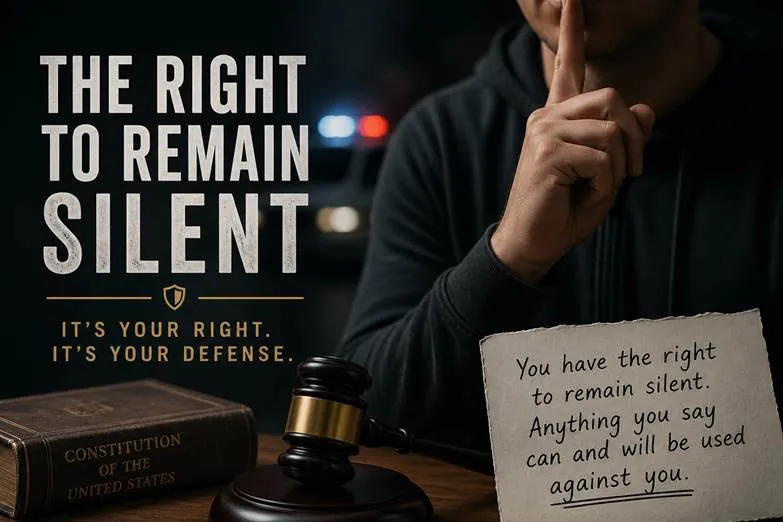
Understanding the Fifth Amendment
The Fifth Amendment to the United States Constitution provides several critical protections to people accused of crimes. One of the most important protections is the right against self-incrimination.
In simple terms, the Fifth Amendment protects you from being forced to provide statements that could be used against you in a criminal prosecution.
This constitutional protection applies in investigations involving virtually every type of offense, including:
● DUI
● Domestic violence
● Drug charges
● Theft and fraud offenses
● Assault and battery allegations
● Sex crimes
● Weapons offenses
● White-collar criminal investigations
Whether you are questioned by the Tampa Police Department, Hillsborough County Sheriff’s Office, state investigators, or federal agents, you generally have the right to remain silent when speaking could expose you to criminal liability.
Too many people make the mistake of believing silence makes them “look guilty.” The reality is that invoking your constitutional rights is often the smartest legal decision you can make.
A knowledgeable Tampa criminal defense attorney will almost always tell you the same thing: do not answer investigative questions without legal counsel present.
What Are Miranda Rights?
Most people are familiar with the famous warning heard in television shows and movies:
“You have the right to remain silent. Anything you say can and will be used against you in a court of law…”
These are commonly known as Miranda rights, which stem from the United States Supreme Court case Miranda v. Arizona.
The Supreme Court ruled that before police conduct a custodial interrogation, officers generally must advise a suspect of certain constitutional protections.
These warnings typically include:
● The right to remain silent
● The warning that anything said may be used against you in court
● The right to an attorney during questioning
● The right to have an attorney appointed if you cannot afford one
Miranda rights exist to help ensure people understand the constitutional protections available to them before police questioning begins.
However, many people misunderstand how Miranda works.
One of the Biggest Misconceptions About Miranda Rights
Many people believe police officers are required to read Miranda rights anytime they ask questions.
That is simply not true.
Police do not have to read Miranda warnings every time they speak with someone. In many situations, officers can ask questions without advising you of your rights, and your statements may still be admissible in court.
Generally speaking, Miranda warnings are only required when both of the following conditions exist:
1. You Are in Custody
Custody does not always mean formal arrest, but it usually means a reasonable person would not feel free to leave.
Examples may include:
● Being handcuffed
● Sitting in a patrol vehicle
● Being placed in an interrogation room
● Being told you cannot leave
● Being physically restrained or prevented from walking away
2. Police Are Interrogating You
Interrogation includes direct questioning or actions designed to elicit an incriminating response.
This can involve:
● Direct accusations
● Questions about what happened
● Requests to explain evidence
● Strategic questioning designed to obtain admissions
If both custody and interrogation are present, Miranda warnings are generally required.
However, if one of those elements is missing, officers may still question you without reading Miranda rights.
That means statements made during traffic stops, conversations at your home, phone calls with detectives, or voluntary interviews at the police station may still be used against you.
This is exactly why speaking with a Tampa criminal defense attorney before talking to police is so important.
Why Talking to Police Is Usually a Mistake
Investigators are trained professionals. Their job is to gather evidence and build cases. They are not neutral participants trying to help you avoid criminal charges.
Officers often use phrases like:
● “We just want your side of the story.”
● “Help us understand what happened.”
● “If you didn’t do anything wrong, you have nothing to hide.”
● “This is your opportunity to explain yourself.”
While these statements may sound reassuring, they are frequently designed to encourage people to keep talking.
Unfortunately, even innocent people can unintentionally damage their defense.
Your Words Can Be Misunderstood
People rarely communicate perfectly under stress.
Something you intended to mean one way may later be interpreted very differently by investigators or prosecutors.
A casual statement can suddenly become an admission.
Small Inconsistencies Can Be Used Against You
Human memory is imperfect.
You may forget exact times, conversations, or details, especially during stressful situations.
Even minor inconsistencies may later be portrayed as dishonesty or consciousness of guilt.
You May Accidentally Admit Key Facts
Many criminal cases are strengthened by seemingly harmless admissions.
For example, a person may unintentionally admit:
● They were present at a scene
● They consumed alcohol before driving
● They touched another person during an argument
● They knew someone involved in the investigation
● They possessed certain property or evidence
These details may appear insignificant in the moment but later become critical building blocks for the prosecution’s case.
You Lock Yourself Into a Statement
Once you give a recorded statement, prosecutors will compare every future statement against it.
If details change later — even for innocent reasons — the government may argue you are being dishonest.
Invoking Your Rights Does Not Make You Look Guilty
One of the biggest fears people have is that asking for a lawyer will make them appear guilty.
That fear is misplaced.
The Constitution gives you the right to remain silent for a reason.
Invoking your rights is not an admission of guilt — it is simply protecting yourself.
If law enforcement wants to question you, a simple response is often best:
“I am invoking my right to remain silent, and I want a lawyer.”
Then stop talking.
Do not explain.
Do not justify yourself.
Do not answer “just one quick question.”
The more you speak, the greater the risk of saying something that can later be misunderstood or used against you.
Common Situations Where People Accidentally Hurt Their Case
Detectives Ask You to “Come Talk”
Police often tell people they are “not under arrest.”
That may be true in the moment.
But investigators may already suspect criminal conduct and simply want additional evidence before making charging decisions.
Police Show Up at Your Home
Many people panic when officers arrive unexpectedly.
You are not required to answer questions simply because officers are at your door.
In many situations, politely declining to speak and contacting a Tampa criminal defense attorney is the better decision.
Domestic Violence Investigations
Domestic violence cases often involve conflicting stories, emotional accusations, and rapidly evolving facts.
Statements made during emotional situations can dramatically influence charging decisions.
DUI Investigations
Admissions about drinking, medications, timing, or driving behavior often become some of the strongest evidence prosecutors use.
Theft, Fraud, and Financial Crimes
Trying to explain complicated financial situations without legal guidance can unintentionally create criminal exposure.
Sex Crime Investigations
In some investigations, police may arrange recorded phone calls or monitored conversations designed to obtain incriminating statements.
People frequently do not realize they are being recorded until it is too late.
What Should You Do If Police Contact You?
If law enforcement reaches out to you during an investigation:
Do:
✔ Remain calm
✔ Be polite and respectful
✔ Exercise your right to remain silent
✔ Contact a lawyer immediately
Do Not:
✘ Give a recorded statement
✘ Attempt to explain your side
✘ Contact alleged victims or witnesses
✘ Destroy evidence or communications
✘ Assume things will “blow over” on their own
Early legal intervention often matters far more than people realize.
A skilled attorney may be able to communicate with investigators on your behalf, protect your rights, and potentially prevent serious mistakes before charges are even filed.
How a Tampa Criminal Defense Attorney Can Protect You
Hiring a Tampa criminal defense attorney early in an investigation can significantly improve your position.
An experienced lawyer may be able to:
● Communicate directly with investigators on your behalf
● Determine whether you are a witness, suspect, or target
● Prevent damaging statements from being made
● Evaluate constitutional issues involving police conduct
● Challenge unlawfully obtained evidence
● Build a defense strategy before charges are filed
In many criminal cases, what happens before an arrest can be just as important as what happens afterward.
At Hunt Law, we represent clients throughout Tampa and Hillsborough County facing serious criminal investigations and charges. We understand how law enforcement builds cases and work aggressively to protect our clients’ constitutional rights from the very beginning.
Contact a Tampa Criminal Defense Attorney Before Speaking to Police
If detectives, investigators, or law enforcement officers want to speak with you, do not assume cooperating will make the situation go away.
A single statement can change the entire course of a criminal case.
The Fifth Amendment exists to protect you.
Miranda rights matter.
And in most situations, speaking with police without legal representation creates unnecessary risk.
If you are under investigation or have been contacted by law enforcement, speak with a Tampa criminal defense attorney before answering questions. The decisions you make early can have a lasting impact on your future.